
Rates range from roughly 10–20% per cycle for intrauterine insemination (IUI) to around 50% per cycle for IVF in women under 35, according to CDC and medical society data. This page gives you the real figures — sourced and dated — and explains why Avida Fertility chooses not to publish its own rates.
In Mexico there is no regulatory body that verifies the success rates fertility clinics publish, unlike the United States and Europe. This doesn't make clinics bad: it means there is no mandatory reporting standard, which opens the door to figures that aren't always comparable or verifiable.
By law (1992), clinics report to the CDC, which verifies and publishes the data. In 2022, 457 clinics reported; ~81% are SART members, covering ~90% of cycles.
ESHRE consolidates regional results under unified reporting standards, enabling reliable cross-country comparisons.
REDLARA has collected data since 1990, but reporting is voluntary. Not all Mexican clinics are registered or submit their results.
There is no mandatory verification. Each clinic publishes whatever it decides, using whatever metric it chooses. Nothing requires the figures to be comparable.
A study from Universidad Anáhuac in Mexico compared the rates that Mexican clinics publish on their websites against REDLARA, ESHRE, and a field study. Clinics advertised rates of between 60% and 90%, well above what the three independent sources reported.
All figures come from dated international sources with the metric stated. Available for couples, single women, single men, and same-sex couples: the probability depends on age, ovarian reserve, and treatment, not your family structure.
These are international reference figures, not Avida's own rates. Your actual prognosis depends on your workup results and is calculated at your assessment.
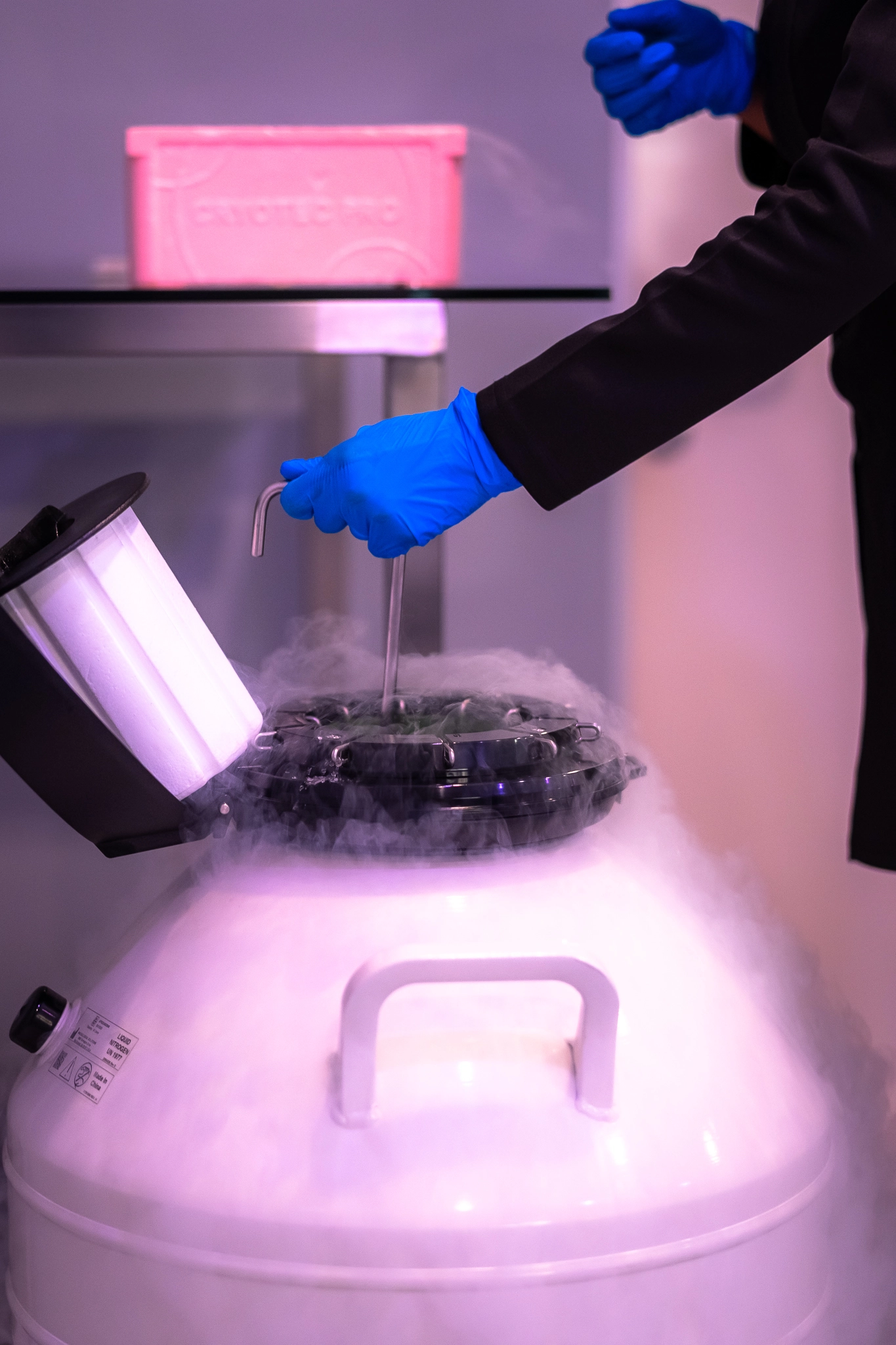
Survival rates above 95% after thaw depend directly on technique and lab quality control. At Avida, every sample is stored with full traceability and continuous tank monitoring.
A rate only means something if you know what it measures. When two clinics publish very different figures, they're often not lying: they're measuring different things.
A biochemical pregnancy is a positive blood test that may not progress. A clinical pregnancy is a heartbeat on ultrasound. A live birth is a baby that is born: the only metric that reflects what you're actually after. In women over 40, the gap between pregnancy and live birth can exceed 50%.
The per-cycle rate counts from the start, including cancelled cycles. The per-transfer rate only counts cycles that reached transfer, so it's always higher. The cumulative rate adds up multiple attempts. All three are valid, but they're not comparable to each other.
Rates with donor eggs are higher because they come from young donors. If a clinic mixes own-egg and donor-egg cycles, the number gets inflated. Always ask for figures separated by egg type and age group.
That's why one clinic can advertise "70%" and another "40%" and both be telling the truth: they're measuring different things. And without verification, those figures are easy to inflate.
In an unverified market like Mexico's, publishing your own success rate would be easy to inflate and hard to verify. That's why at Avida Fertility we choose not to publish our own figures. We calculate an individual prognosis for each patient based on your actual workup results — age, ovarian reserve (AMH), diagnosis, and treatment response — using fertility treatment protocols under Vienna Consensus and ESHRE criteria.
The most recent international data (CDC 2022) shows a live birth rate of approximately 49.7% per cycle in women under 35 using their own eggs, declining with age. There is no equivalent verified report for Mexico.
Between 5% and 20% per cycle, depending on age and diagnosis. Cumulatively, more than half of women under 40 achieve pregnancy within 3 to 6 cycles, which is why guidelines recommend considering IVF after 3 or 4 attempts.
Around 15 to 20 before age 35 for approximately an 80% chance of at least one live birth. With around 9 mature eggs, the probability is roughly 70% for women under 35.
No. There is no mandatory verification in Mexico, unlike the United States (CDC) or Europe (ESHRE). A study from Universidad Anáhuac (2020) documented significant differences between what clinics publish (60–90%) and independent sources.
Because without external verification, figures can easily be inflated, and every case is unique. Avida offers a personalized prognosis under international standards (Vienna Consensus / ESHRE), rather than a marketing number.
Yes. The probability of success depends on age, ovarian reserve, and the indicated treatment, not on family structure or marital status.
Live birth means a baby is born. Many inflated figures use "pregnancy" (biochemical or clinical), which includes cases that don't reach term. Live birth is the only metric that reflects the actual outcome you're looking for.
Book your assessment and receive your personalized prognosis, calculated from your workup results under international standards.
All figures cited come from the following sources. Last content review: 2026.
Centers for Disease Control and Prevention. (2024). 2022 Assisted reproductive technology fertility clinic and national summary report. U.S. Department of Health and Human Services. https://www.cdc.gov/art/reports/
European Society of Human Reproduction and Embryology. (2024). Evidence-based guideline: Unexplained infertility. ESHRE. https://www.eshre.eu/Guidelines-and-Legal
Practice Committee of the American Society for Reproductive Medicine. (2022). Optimizing natural fertility: A committee opinion. Fertility and Sterility, 117(1), 53–63. https://doi.org/10.1016/j.fertnstert.2021.10.007
Goldman, R. H., Racowsky, C., Farland, L. V., Munné, S., Ribustello, L., & Fox, J. H. (2017). Predicting the likelihood of live birth for elective oocyte cryopreservation: A counseling tool for physicians and patients. Human Reproduction, 32(4), 853–859. https://doi.org/10.1093/humrep/dex008
Red Latinoamericana de Reproducción Asistida. (2023). Registro latinoamericano de reproducción asistida. REDLARA. https://redlara.com/registro
Society for Assisted Reproductive Technology. (2023). SART national summary report 2022. SART. https://www.sartcorsonline.com
World Health Organization. (2023). Infertility prevalence estimates, 1990–2021. WHO. https://www.who.int/publications/i/item/978920068315
Pérez-Tamayo, R. (2020). Comparative analysis of success rates published by fertility clinics in Mexico [Análisis comparativo de las tasas de éxito publicadas por clínicas de fertilidad en México]. Medicina y Ética, 31(4), 1017–1052. Universidad Anáhuac México. https://doi.org/10.36105/mye.2020v31n4.05
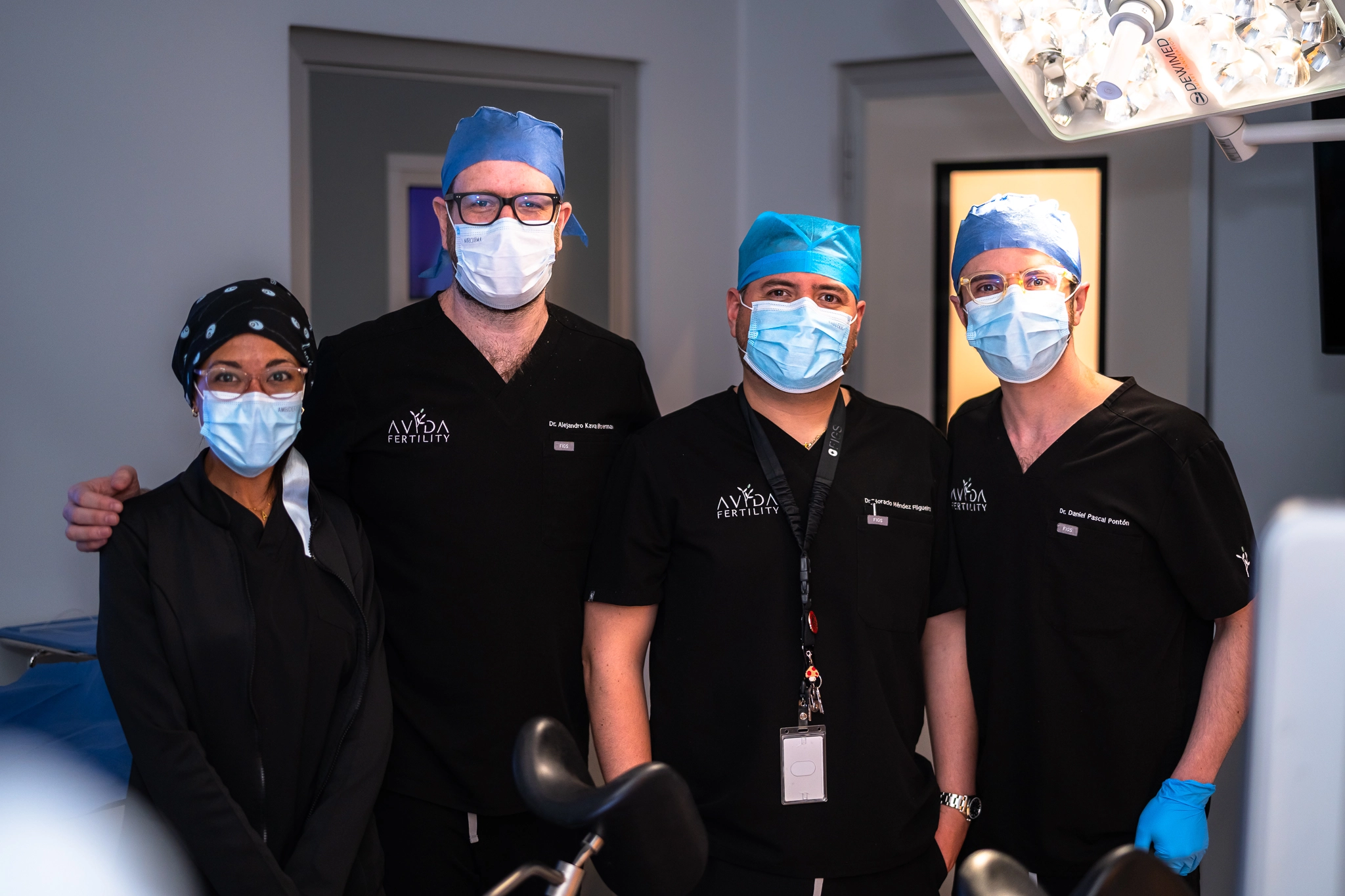
This content is informational and does not replace professional medical consultation. Reviewed by Avida Fertility's Medical Board: Dr. Daniel Pascal Pontón, Dr. Alejandro Kava Braverman, and Dr. Horacio Méndez Filgueira.
.svg)


.svg)
.svg)