

Female Fertility Tests in CDMX
If you came looking for a "test to find out if I'm sterile," you should know that sterility is rare. Most cases involve infertility, which is difficulty achieving pregnancy after trying for some time, caused by factors we can study and treat.
We understand that the diagnostic process can be stressful and create uncertainty. That's why, at Avida, we support you every step of the way with a compassionate team and clear guidance to make this journey easier.
What Does the Female Fertility Study at Avida Involve?

At Avida, we combine in a single consultation the basic tests that every woman should consider when she wants to understand her fertility: her egg reserve, whether her hormones are balanced, and if her uterus offers good conditions for a future pregnancy. The goal is to give you a clear picture of your reproductive health without overwhelming you with unnecessary tests.
Ovarian Reserve Assessment (Egg Count)


Ovarian reserve is the medical way to estimate how many "available" eggs you have left and how your fertility might behave in the coming years. To measure it, we combine:
- Transvaginal ultrasound: the specialist performs an in-office study where they observe both ovaries and count antral follicles (small fluid-filled sacs containing immature eggs). This count is colloquially known as an egg count and is one of the most accepted methods for assessing ovarian reserve.
- Anti-Müllerian Hormone (AMH) test: this is a blood test that reflects your ovarian reserve; unlike other hormones, it can be measured almost any day of the cycle and has become a useful marker of ovarian reserve.
At Avida, we interpret these results together and, when appropriate, we often delve deeper into the anti-Müllerian test to help you plan whether it's advisable to advance your pregnancy or consider options like freezing eggs in the future.
Female Hormone Profile
The female hormone profile is a set of blood tests that tells us how your ovaries, pituitary gland, and thyroid are functioning, which together regulate your cycle and ovulation:
- FSH (Follicle-Stimulating Hormone) and LH (Luteinizing Hormone): help determine how "hard" your ovaries are working to respond and release eggs.
- Estradiol: guides us on ovarian activity at the beginning of the cycle and complements the interpretation of FSH.
- Prolactin: high levels can disrupt ovulation and cause irregular cycles.
- TSH (Thyroid): altered thyroid function is a common and treatable cause of ovulation and implantation problems.
Rather than just giving you a list of lab values, we integrate these results with your medical history and symptoms (irregular cycles, heavy bleeding, weight changes, etc.) to explain in simple terms what's happening and what the next steps are.
Specialized Gynecological Examination
Finally, we perform a specialized gynecological examination to ensure that the uterus and pelvis provide a favorable environment for pregnancy. This usually includes:
- Physical exam and speculoscopy, to assess the cervix and rule out infections or lesions.
- Detailed transvaginal ultrasound, to identify fibroids (myomas), endometrial polyps, or visible signs of endometriosis that could affect embryo implantation or increase the risk of bleeding and miscarriage.
The goal isn't to "look for problems," but rather to confirm that everything is in order or, if we find something, to calmly explain what it means and what management options exist before considering more complex treatments like in vitro fertilization.
With these three pillars – ovarian reserve, hormones, and uterus – we obtain the comprehensive diagnosis every woman needs to make informed decisions about her fertility, and based on that, we determine if it's necessary to proceed with more specialized fertility tests.
.svg)
How Your Female Fertility Test Works at Avida
Initial Consultation and Medical History
The first step is to listen to you to understand your medical and personal context. We discuss how long you've been trying to conceive (alone or with a partner), your menstrual cycles, and your medical history. This conversation allows us to focus subsequent tests and ensure we evaluate exactly what you need without ordering unnecessary procedures.
Specialized Transvaginal Ultrasound
We perform an in-office examination to directly observe your ovaries and count antral follicles. In this same step, we evaluate your uterus to rule out conditions such as fibroids or endometrial polyps that could affect implantation.
Blood Test and Hormonal Profile
We evaluate your hormone balance through a blood test to understand how your ovaries are functioning internally. We measure key indicators such as Anti-Müllerian Hormone (AMH) to estimate your ovarian reserve, as well as your thyroid function and other fundamental hormones like FSH and LH.
Integration and Explanation of Results
We don't just hand you a list of lab values to decipher on your own. Our medical team collectively interprets your medical history, ultrasound results, and hormone profile. We explain your current reproductive health status in simple terms and answer all your questions.
Defining Your Next Steps
With a clear diagnosis, we develop a personalized action plan based on your goals. Together, we decide whether medical adjustments are appropriate, if planning for future egg freezing is beneficial, or if assisted reproductive treatments should be considered.
Cost of Female Fertility Testing in Mexico
When you search for "female fertility test cost", it's normal to expect an exact figure. But in practice, the cost isn't the same for all women, because the depth of the evaluation each one needs isn't either.
At Avida Fertility, we work with a different approach than "fixed packages": first, we define with you what type of evaluation you need, and from there, your budget is created. It's not the same as:
A complete infertility diagnosis, which may include a hormonal profile, detailed ultrasound, hysterosalpingography (HSG), and other specialized tests depending on your case.

A preventive check-up for a young woman with no relevant medical history (for example, focusing on Anti-Müllerian Hormone – AMH – and a follicular count ultrasound).
Think of the cost of a female fertility test as a tiered investment: you start with basic tests and only add additional tests if they truly provide information for your diagnosis. This way, you only pay for what you medically need, without unnecessary tests "by protocol."
If you want to know how much your specific evaluation would cost, the most honest approach is to review your situation during a consultation and, based on that, create a plan.
When should I get a female fertility test?
It's very common to wonder “is it time for a female fertility test, or should I wait?”. It's not about panicking, but about not letting valuable time slip away, especially when age and certain medical history can accelerate the decision.
Scientific societies like the ASRM recommend initiating a fertility evaluation after a certain period of trying to conceive without success, adjusting the criteria based on the woman's age.
When to seek help sooner
Even if you haven't been trying to conceive for 6 or 12 months, it's advisable to consult immediately if you have:
- Irregular cycles or absence of periods; suggest ovulation problems.
- Severe pelvic pain or a diagnosis/suspicion of endometriosis.
- Pelvic surgeries or infections in the ovaries, fallopian tubes, or uterus.
- Chemotherapy or radiation therapy treatments.
- History of recurrent miscarriages or a genetic factor.
Meet your team of fertility specialists
An accurate diagnosis requires highly specialized doctors with genuine empathy. At Avida Fertility, we understand that evaluating your reproductive health can cause anxiety. That's why our team not only has years of experience interpreting ovarian reserves and hormonal profiles, but also provides you with compassionate support from your very first visit. We believe you deserve clear answers, scientific rigor, and warm care that puts your needs at the center of the process.

Co-founder and CEO
Surgeon with an MBA and extensive experience in healthcare project management.

Obstetrician-gynecologist and specialist in human reproductive biology

Biologist specializing in clinical embryology and andrology

Obstetrician-gynecologist and specialist in human reproductive biology
Your Fertility Clinic and Laboratory in CDMX



.webp)


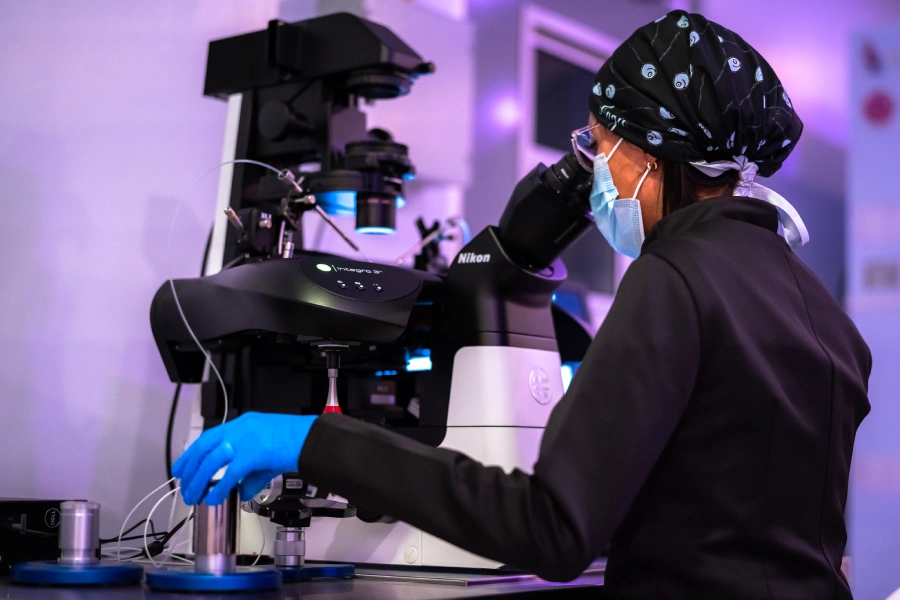
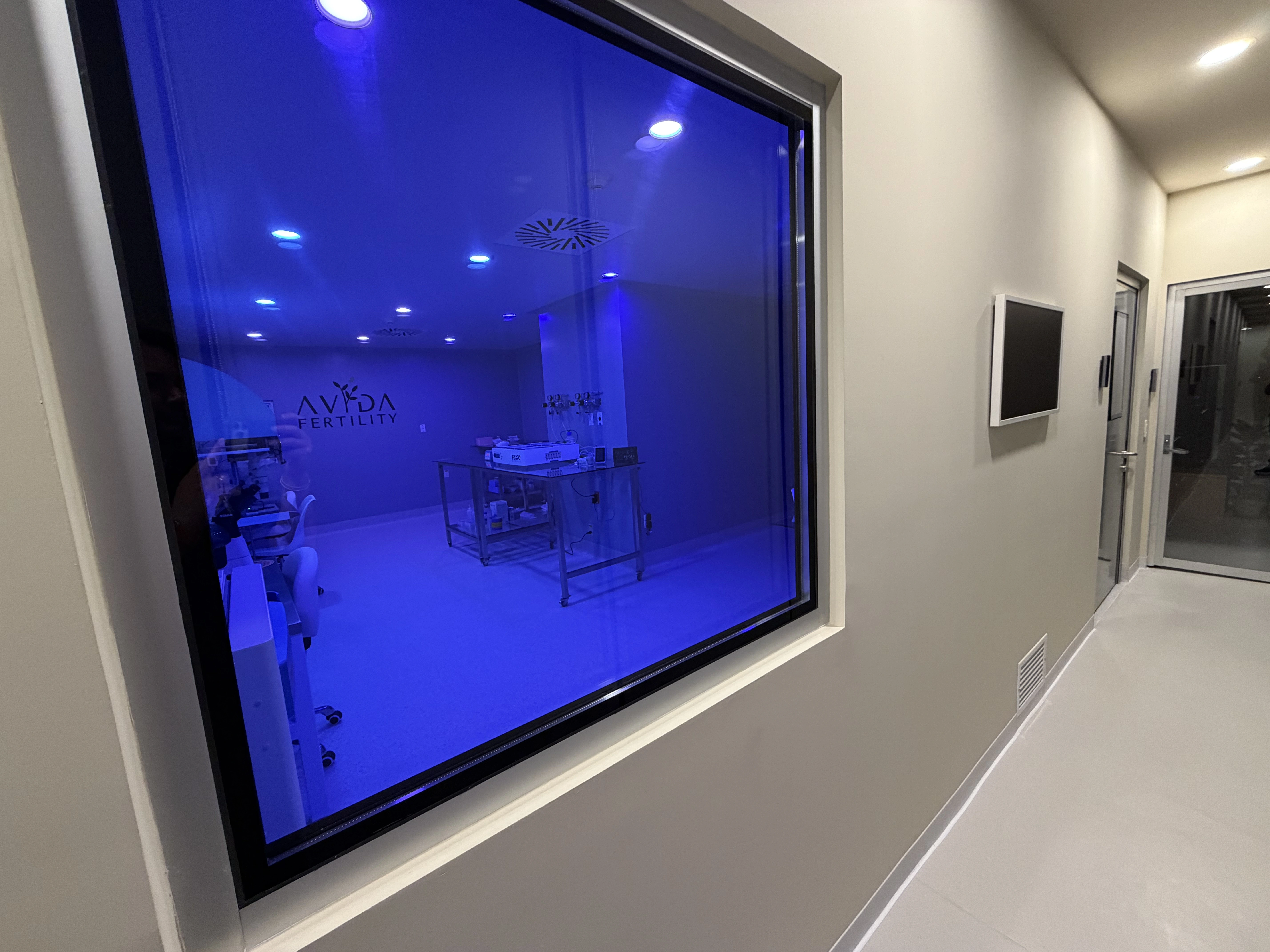
Knowing the place where you'll pursue your family dream can bring you peace of mind from the very beginning. Avida Fertility is a fertility clinic on the outskirts of CDMX that combines human warmth with cutting-edge technology to support you on your reproductive journey.
At our facilities in Interlomas, Huixquilucan, State of Mexico, you'll find spaces designed for your emotional and physical well-being: from a welcoming reception area to consultation rooms and specialized areas for monitoring and studies. Our fertility lab is equipped with modern technology that supports procedures ranging from diagnostics to highly complex treatments, always under health protocols approved by COFEPRIS and with personalized attention for each case.
Our patients




.jpg)

.png)
Frequently Asked Questions about Female Fertility Testing
What test is done to find out if a woman is fertile?
There isn't a single test that can tell if a woman is fertile or infertile. In a complete female fertility test, we combine three elements: medical history and gynecological examination, blood tests (hormone profile and, when applicable, Anti-Müllerian Hormone), and transvaginal ultrasound to evaluate the uterus, ovaries, and follicular count.
How much does a female fertility test cost in CDMX?
The price of a female fertility test depends on how in-depth your evaluation needs to be. A basic check-up (for example, AMH and a simple ultrasound) doesn't cost the same as a complete diagnosis with hormones, detailed ultrasound, and fallopian tube tests. At Avida, we create a personalized quote based on your case.
How can I check my fertility at home? Are home kits useful?
Pharmacy ovulation tests and some apps can help you identify your fertile days, but they do not diagnose infertility. They don't tell you about your ovarian reserve, if your fallopian tubes are open, or if your uterus has abnormalities. They are a useful support, but they don't replace a complete medical evaluation.
How is a female fertility test performed at the clinic?
At Avida, a female fertility test usually begins with a detailed consultation about your history, cycles, and medical background. Afterwards, we perform a transvaginal ultrasound to evaluate your uterus and ovaries, and take blood samples for your hormone profile and, when indicated, Anti-Müllerian Hormone as an ovarian reserve marker.
How painful is a hysterosalpingography (fallopian tube test)?
A hysterosalpingography (HSG) can be uncomfortable, but for most women, the pain is described as moderate menstrual cramps lasting a few minutes. We can prescribe pain relievers before the procedure and explain each step to reduce anxiety, which also helps make the experience more manageable.
How can I tell if I'm fertile or not if I don't have symptoms?
Infertility is often silent: having regular periods or no discomfort doesn't guarantee that everything is fine. To understand your reproductive potential, we assess your ovarian reserve with Anti-Müllerian Hormone and follicular count by ultrasound, in addition to reviewing your medical history and other potential risk factors.
Is it better to get a fertility test at a lab or a clinic?
A general lab can provide quality results, but you'll only see numbers. At a fertility clinic, like Avida, a reproductive specialist interprets your tests, integrates age, symptoms, and medical history, and turns them into a clear action plan: follow-up, simple adjustments, or assisted reproduction treatments if needed.
What's the best time in my cycle to get the tests done?
For the basal hormone profile (FSH, LH, Estradiol), we usually recommend blood draws between days 2 and 4 of the cycle. In contrast, Anti-Müllerian Hormone and follicular count ultrasound can be performed almost anytime, because they are relatively stable markers throughout the menstrual cycle.
What test detects how many eggs I have left?
The specific test to estimate how many "available" eggs remain is the Anti-Müllerian Hormone (AMH). It's a blood test that correlates with the number of growing follicles and, along with follicular count by ultrasound, guides us on your ovarian reserve and how it might behave in the coming years.
Where can I get a reliable female fertility test in Mexico?
It's ideal to go to centers with experience in assisted reproduction and formal accreditations, for example, belonging to networks like RedLARA, which certify laboratory quality and processes. At Avida Fertility, in the western part of CDMX, we have our own laboratory and certified specialists to assess your fertility with international standards.
Visit our Fertility Center in Mexico City


Leave us a message.
.svg)


©2026 AVIDA FERTILITY™
Dr. Daniel Pascal Pontón
Professional License SEP: 13928465

.svg)
.svg)
