

Fertility preservation
Egg Freezing in Mexico City: Take Control of Your Fertility
Egg freezing in the United States often costs far more than many women can plan for, and the biology does not wait while you save up. That combination leaves many women feeling stuck, but it does not have to be that way.
Every year, thousands of Americans travel to Mexico City for accredited egg freezing at a fraction of US cost.
Free · Virtual call with a fertility advisor (not a medical consultation)
This page explains what egg freezing is, what it costs compared with the US, your realistic odds of success, and how the entire process works remotely from home.
This decision is part of your broader fertility preservation options, alongside sperm freezing and embryo freezing.
Definition
What Is Egg Freezing?
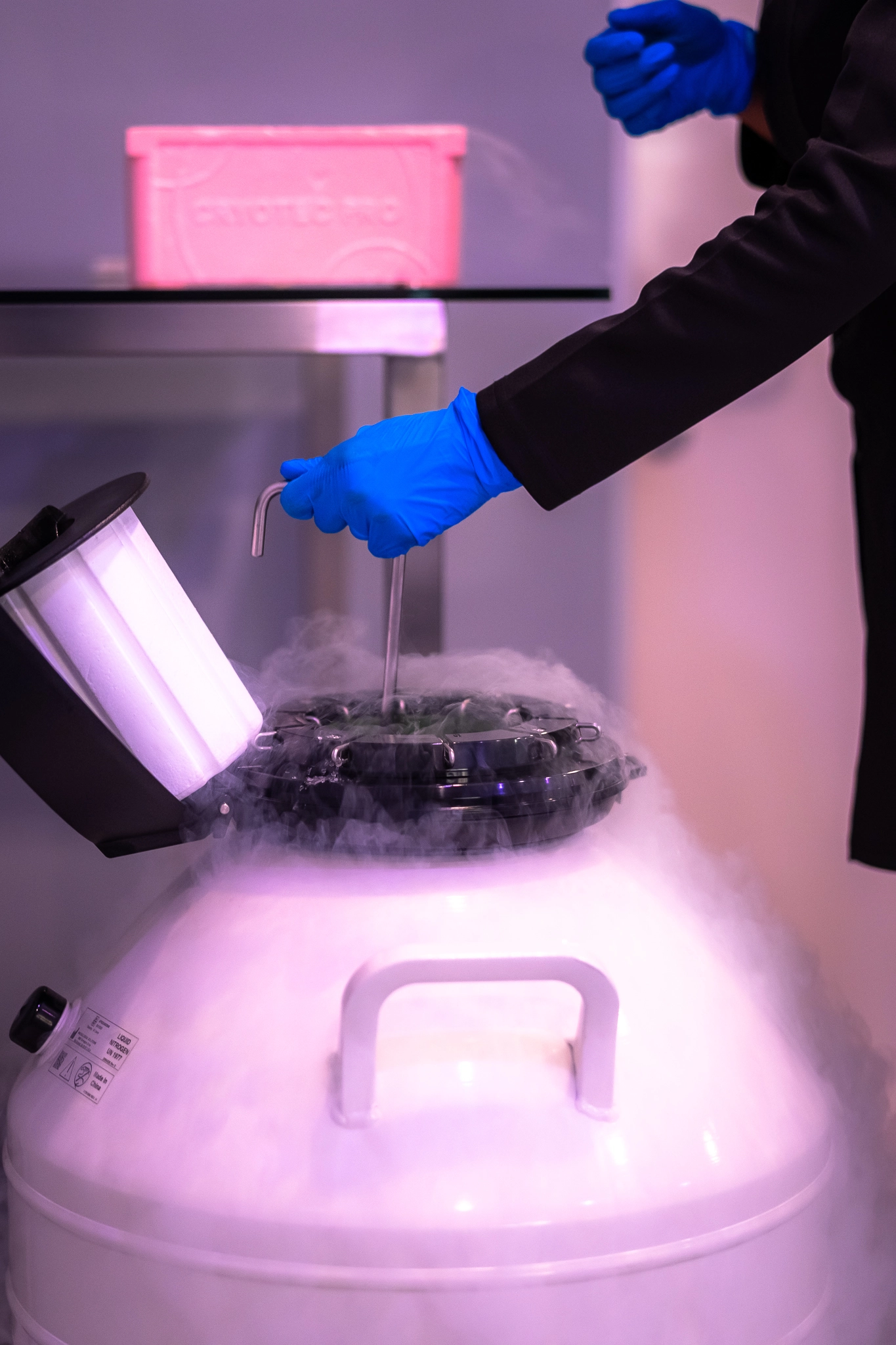
Egg freezing, also called oocyte cryopreservation, is a procedure that retrieves your mature eggs, vitrifies them in liquid nitrogen, and stores them indefinitely so you can use them later through IVF. Your eggs keep the quality they had at the age you froze them, preserving your fertility against age or a medical treatment.
The technique that makes this possible is vitrification, an ultra-fast freezing method that prevents the ice crystals that could otherwise damage an egg. With modern vitrification, egg thaw-survival rates are high, and the practice is well established and recognized by the American Society for Reproductive Medicine (ASRM).
One important advantage
Unlike embryo freezing, egg freezing does not require a partner or sperm right now.
You preserve your own eggs and decide later, with whom and when, to build your family.
Mexico vs the US
How Much Does Egg Freezing Cost in Mexico vs the US?
At many Mexico City clinics, egg freezing costs a fraction of what it does in the US, which is why so many American patients travel here for it. Rather than a fixed price list, Avida shares a personalized estimate in consultation, because your cost depends on your case.
A few things to keep in mind about what shapes the cost:
Medication and storage
Medication and annual storage are billed separately from the procedure, and your medication varies with your ovarian reserve.
Number of cycles
Depending on your age and ovarian reserve, you may need two or more cycles to bank enough eggs, which affects the total.
The full trip
Budget for the full trip, not just the procedure: treatment, flights, and a short stay.
A personalized review
The most accurate number comes from a personalized review of your case, not a price list.
Because your final cost depends on your body's response and how many cycles you need, the most accurate figure comes from a personalized review. For context on other treatments, see our guide to fertility treatment costs in Mexico.
If you are wondering how many cycles you might need, our article on how many egg retrievals it takes to have a baby explains the factors involved, and you can review fertility treatment financing options.
Get your personalized cost estimate in a free virtual consultation.
Free · Virtual call with a fertility advisor
Realistic expectations
What Are Your Realistic Odds?
Egg freezing improves your future options, but it is not a guarantee. Your odds depend mainly on your age when you freeze and the number of mature eggs you bank. We would rather give you honest numbers than an inflated promise.
The table shows international benchmark estimates, drawn from published studies and national data, not Avida's own statistics. With modern vitrification, egg thaw-survival is roughly 80 to 90%. These figures are averages, not promises, and every person is different.
| Age at freezing | Mature eggs (benchmark) | Chance of at least one live birth |
|---|---|---|
| Under 35 | ~9 – 10 | ~70% |
| 35 to 37 | ~20 | ~80% (cumulative) |
| 38 to 40 | ~30 | ~75% |
| 40 to 42 | ~30 | ~50% |
Here is our stance, plainly: we do not publish inflated success rates. We counsel you with international benchmarks from the ASRM, SART and the CDC, and peer-reviewed research such as Cobo et al. 2023 on vitrification survival and the Goldman and Doyle studies on eggs by age. Then we give you an honest, individualized estimate in your consultation. Learn more about our honest approach to success rates and real IVF success rates by age.
Want to understand your personal odds? Schedule a free virtual consultation.
Who it is for
Who Is a Good Candidate for Egg Freezing?
Any woman in her reproductive years who wants to protect her fertility can be a candidate, whether for personal, professional, or medical reasons. You do not need a partner or a fixed plan; sometimes wanting more time is reason enough.
The best age to freeze is before 35, when egg quantity and quality are at their peak, with the optimal window between 20 and 30. Egg freezing can still be worthwhile up to about 38 to 40 with a personalized evaluation.
Women delaying motherhood
For career, education, or timing reasons.
Women without a partner
Who want to keep their options open, including a future path as a single mother by choice.
Before a medical treatment
Patients facing a treatment like chemotherapy, before it affects fertility (oncofertility).
Diminished ovarian reserve
Women with diminished ovarian reserve or a family history of early menopause.
Transgender men
Who want to preserve eggs before starting testosterone. Learn more about fertility care for trans individuals.
Your ovarian reserve matters as much as your age, which is why an AMH test (anti-Müllerian hormone, a marker of your ovarian reserve) and an antral follicle count help estimate how many eggs you might retrieve per cycle, as part of a fertility test for women.
If you want to understand egg quality, our guide on how to improve egg quality is a helpful starting point.
One honest note, because trust matters more than a booking. If your ovarian reserve is very low or your eggs may no longer be viable, egg freezing may not be the most effective path, and egg donation can offer a better chance of pregnancy.
Step by step
The Egg Freezing Process
The egg freezing process takes about 10 to 14 days and follows five steps: evaluation, personalized stimulation, egg retrieval, vitrification, and secure storage. For US patients, much of it begins remotely.
Step 1: Evaluation
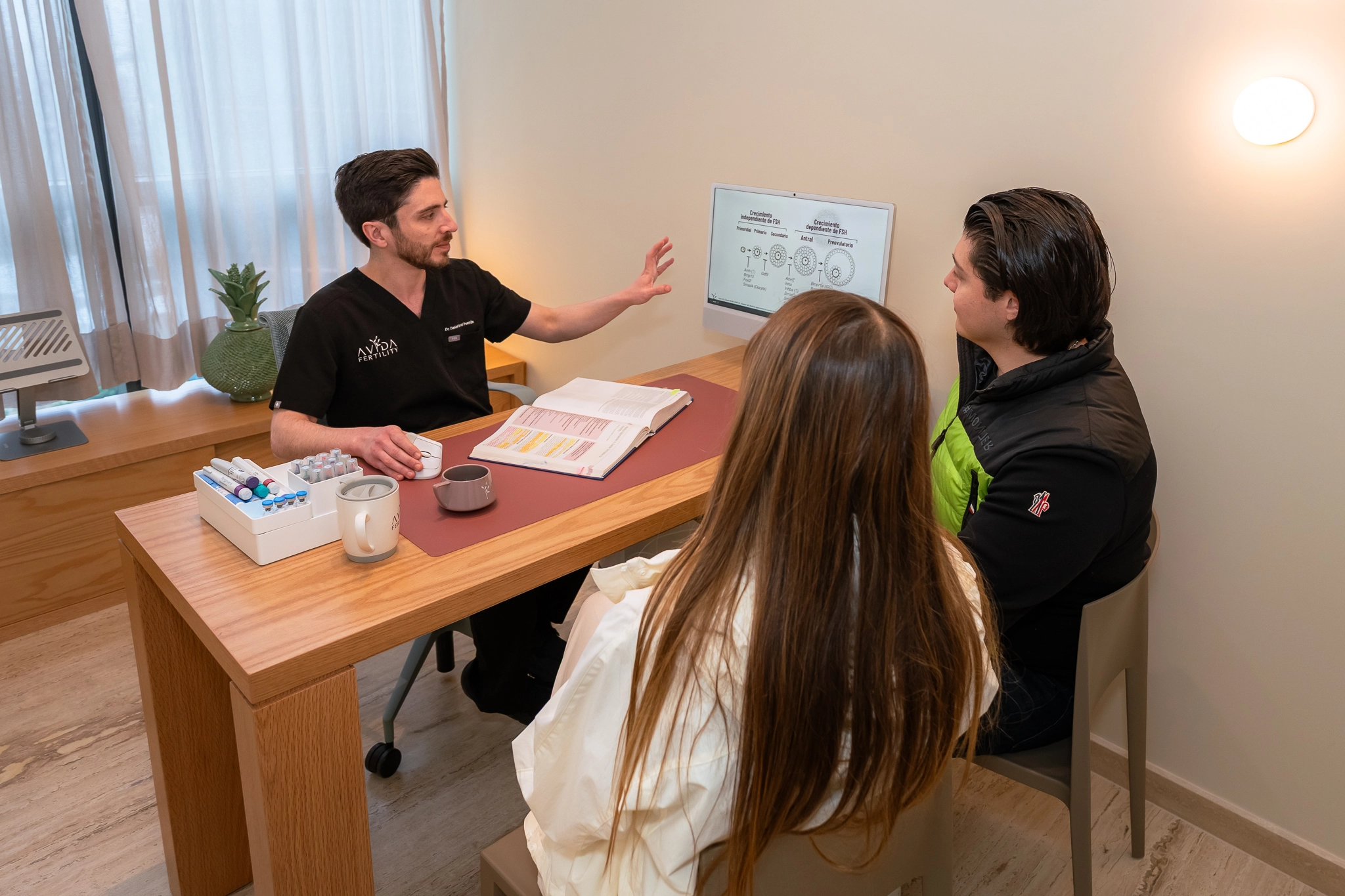
RemoteThis starts remotely with a virtual consultation, plus baseline hormone tests and an antral follicle count. Where possible, initial labs can be done locally in the US.
Step 2: Personalized stimulation
10 – 15 daysFor about 10 to 15 days, you take injectable medications so your ovaries mature several eggs instead of one. Some monitoring can be done locally and some in Mexico City. Read about fertility medication side effects.
Step 3: Egg retrieval (follicular puncture)
20 – 30 minIn Mexico City, this outpatient procedure is performed under sedation and guided by ultrasound. It takes 20 to 30 minutes, and you can go home the same day.
Step 4: Vitrification
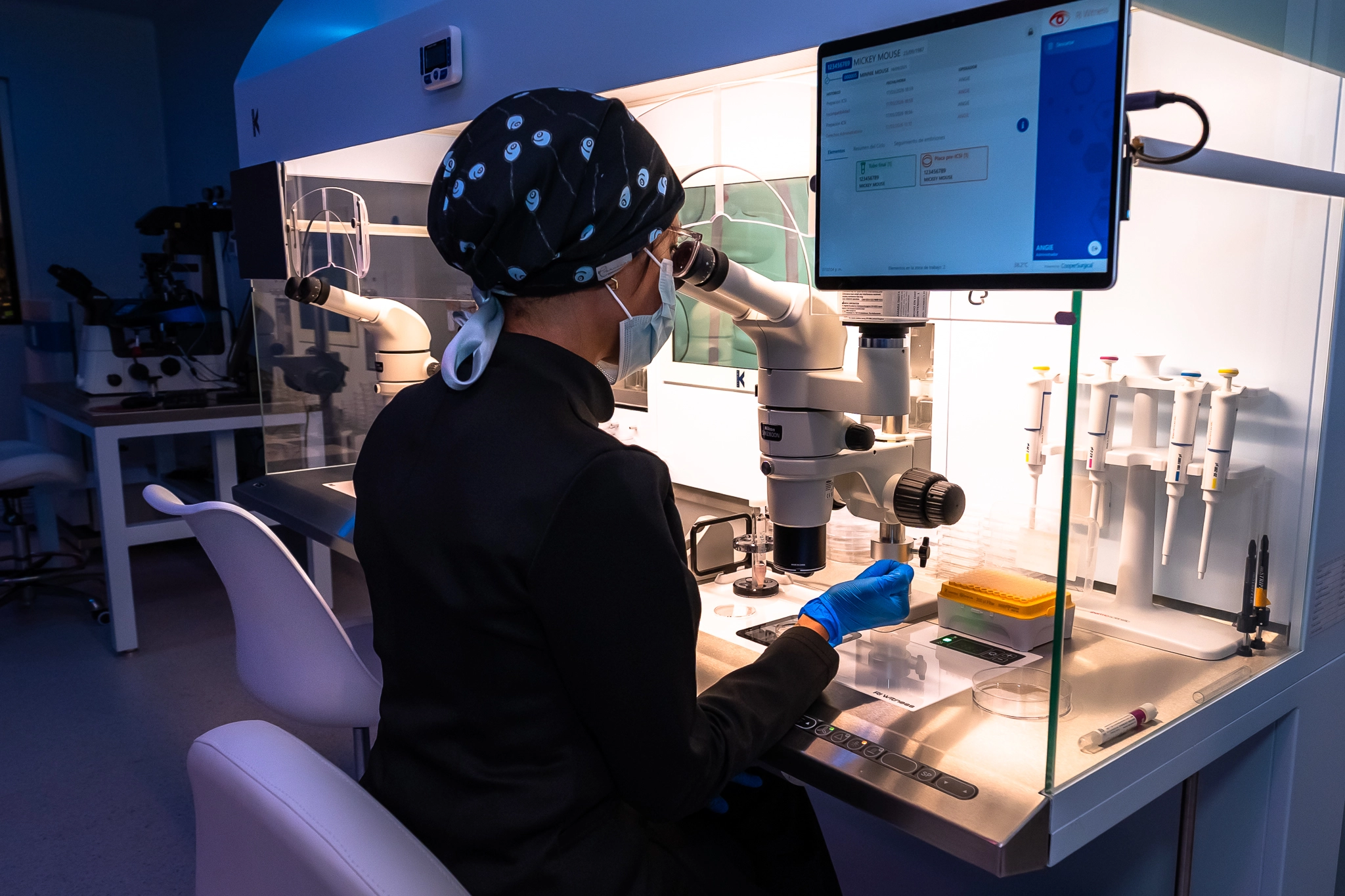
Same dayThe same day, embryologists select the mature eggs and vitrify them. You receive a report of how many eggs were frozen and their quality.
Step 5: Secure storage
IndefiniteYour eggs are stored in liquid nitrogen with constant monitoring and full traceability, and can be kept indefinitely without losing quality. When you decide to use them, they are thawed and fertilized through IVF.
Traveling from the US
The Process for US Patients
Traveling for egg freezing is simpler than most people expect. You get direct flights to Mexico City from most US hubs, no visa requirement for US citizens, and a Central-US timezone that makes scheduling and monitoring handoffs easier.
For a retrieval cycle, plan for a short stay in Mexico City around the retrieval itself. An English-speaking team coordinates every step, and when you are ready to use your eggs, they help coordinate the handoff to your US OB/GYN or fertility clinic.
- 1 · From home
Virtual consultation
Your evaluation starts remotely, and initial labs can often be done locally in the US.
- 2 · In Mexico City
Short stay for retrieval
Plan your trip around the retrieval, after stimulation that can partly be monitored locally.
- 3 · Back home
Coordinated handoff
When you are ready to use your eggs, we coordinate with your US OB/GYN or fertility clinic.
Oversight and standards
Is Egg Freezing in Mexico Safe?
Yes, egg freezing in Mexico is safe when the clinic is accredited and transparent. Avida operates under COFEPRIS, Mexico's equivalent of the US FDA, under permit 253300201A1949, with vitrification and secure cryostorage consistent with ESHRE and ASRM standards.
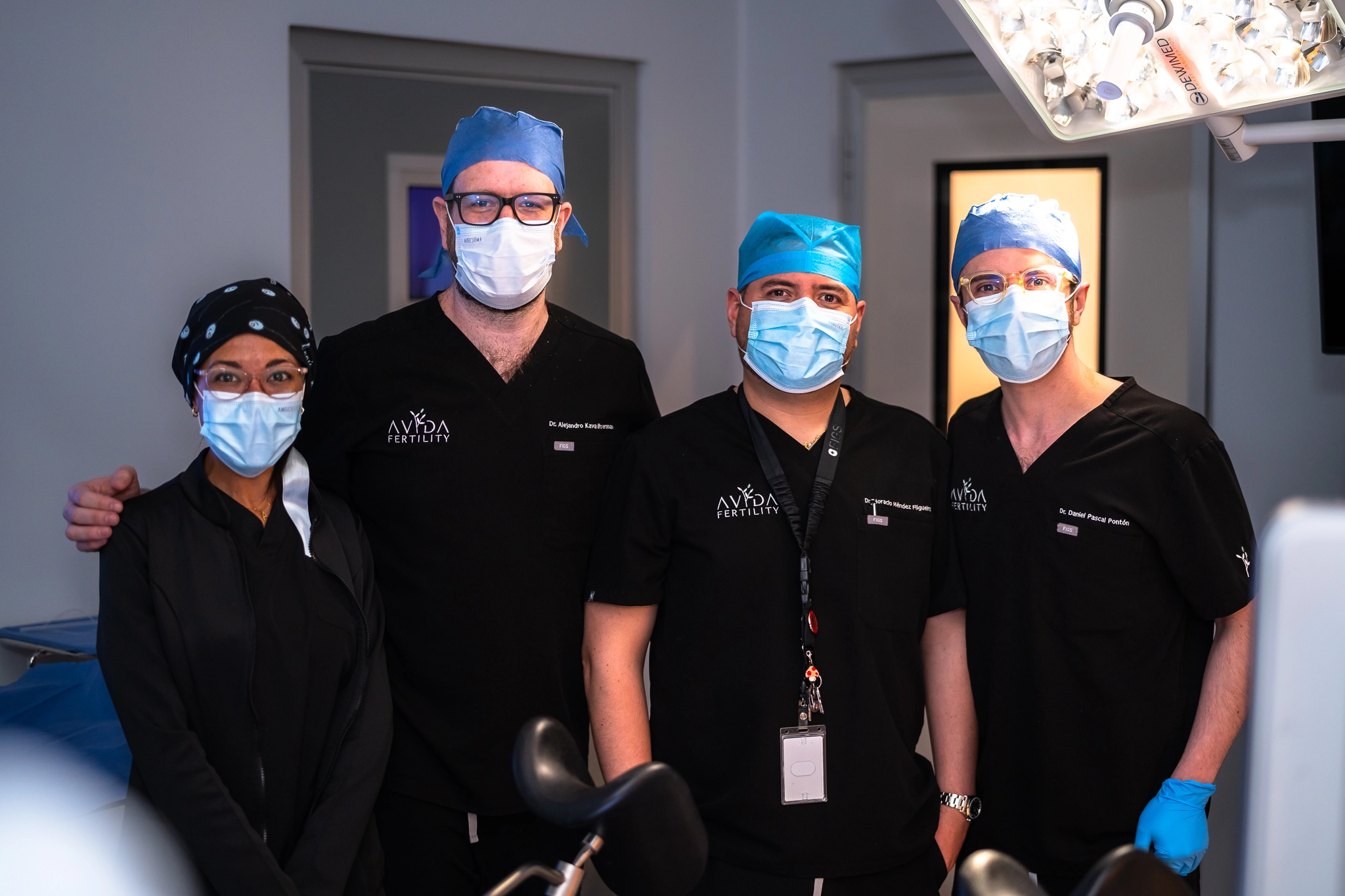
The clinical team behind this page includes Dr. Daniel Pascal Pontón (SEP license 13928465) and Dr. Alejandro Kava Braverman, specialists in reproductive biology. Meet our clinical team. And consistent with our odds section, we counsel with honest benchmarks rather than inflated claims, which we believe is the clearest safety signal of all.
Comparison
Egg Freezing vs Embryo Freezing
The main difference is that egg freezing does not require sperm or a partner right now, while embryo freezing fertilizes your eggs first through IVF. Egg freezing gives you flexibility and a fully individual decision; embryo freezing tends to offer slightly higher survival per thaw and suits those ready to fertilize now with a partner or donor.
If you are weighing both, see our full comparison on the embryo freezing page.
| Factor | Egg freezing | Embryo freezing |
|---|---|---|
| Needs sperm now? | No | Yes (partner or donor) |
| Thaw survival | ~90% (vitrification) | ~95% (vitrification) |
| Flexibility on who fertilizes | High (decide later) | Lower (decided now) |
| Best for | No partner yet / keep options open | Have a partner or donor / ready now |
A medical destination
Why Mexico City?
Mexico City is a genuine medical hub, not a resort detour, which matters when you are making a clinical decision. You get direct flights, no visa for US citizens, a Central-US timezone, and hospital-grade infrastructure. For the full case, see our fertility preservation hub.
Why Avida
Why Avida for Egg Freezing?
What sets Avida apart is the combination of an in-house lab, end-to-end coordination, and a protocol built around your body, all delivered by an English-speaking team. Backing all of this is a clinical team that reviews our medical content, so your care rests on named specialists rather than anonymous marketing.
Here is what that looks like in practice
State-of-the-art embryology lab
Retrievals are performed in a dedicated operating room under sedation, guided by real-time ultrasound, so each step is precise and comfortable.
All-inclusive coordination
For international patients, we handle the journey end to end, from your first virtual consultation through vitrification, storage, and follow-up.
Cryobiology lab with secure storage
Your eggs are vitrified and kept in monitored liquid nitrogen with full traceability, for as long as you need.
Protocol tailored to your reserve
We design your stimulation around your AMH and antral follicle count, using a standard, higher-stimulation, or more conservative approach to reduce the risk of ovarian hyperstimulation (OHSS) depending on your case.
Honest, benchmark-based counseling
We counsel with international benchmarks and give you an individualized estimate, never inflated or unverifiable success claims.
An English-speaking team
Coordination in English runs through every step, from your first virtual consultation to the handoff with your US OB/GYN or clinic.

Your consultation
Ready to design your personalized plan? Schedule a free virtual consultation.
Medical disclaimer. This content is for informational purposes and does not replace professional medical advice. Every case is unique and requires a personalized evaluation by a reproductive biology specialist. Timeline and success figures are benchmarks and vary by individual situation; your cost is defined in a personalized consultation.
FAQ
Frequently Asked Questions About Egg Freezing
Have another question? A fertility advisor can help you in English.
How does egg freezing cost compare in Mexico vs the US?
At many Mexico City clinics, egg freezing costs a fraction of what it does in the US, which is why many American patients travel here. Rather than a fixed price, you receive a personalized estimate in your consultation, since your cost depends on your case and how many cycles you need.
Is egg freezing in Mexico safe for Americans?
Yes, when the clinic is accredited and honest. Avida operates under COFEPRIS oversight (permit 253300201A1949) with vitrification and secure cryostorage consistent with ESHRE and ASRM standards, and counsels with honest benchmarks rather than inflated claims.
How many eggs should I freeze for a good chance of a baby?
It depends on your age. As a benchmark, roughly 9 to 10 mature eggs under 35 give about a 70% chance of at least one live birth, with more eggs recommended as age increases. Your specialist gives you an individualized target.
What are my real odds of success?
Egg freezing improves your options but is not a guarantee. Odds depend on your age at freezing and the number of mature eggs banked. We counsel with honest, benchmark-based estimates, not proprietary success claims.
What is the best age to freeze my eggs?
Ideally before 35, with the optimal window between 20 and 30, when egg quantity and quality are highest. Freezing can still be worthwhile up to about 38 to 40 with a personalized evaluation.
Does egg freezing hurt?
The egg retrieval is done under sedation, so you will not feel pain during the procedure. Afterward, mild cramps similar to a period are normal and usually last 24 to 48 hours. Most patients return to their routine the next day.
Does ovarian stimulation affect my natural fertility?
No. Stimulation does not bring menopause forward or deplete your reserve. The medications use eggs your body would have lost that same cycle naturally, so your future fertility is not compromised.
How long can eggs stay frozen?
Indefinitely. All biological activity stops completely, so eggs do not age or lose viability while frozen. Storage time does not affect their future chances.
Do I need to speak Spanish?
No. Avida has an English-speaking team that coordinates your entire journey, from the first virtual consultation to your return home.
How long do I need to stay in Mexico City for a cycle?
Plan for a short stay around the retrieval, after roughly 10 to 15 days of stimulation that can partly be monitored locally. Your coordinator gives you an exact timeline for your case.
Does my US insurance cover treatment in Mexico?
Usually not directly. That said, many patients request itemized invoices to submit for FSA or HSA use or partial reimbursement. Check with your provider, and we can provide the documentation you need.
The first step
Ready to take control of your fertility?
Schedule your free virtual consultation with our English-speaking team.
Free · Virtual call with a fertility advisor (not a medical consultation)