PGT-A
Screens for chromosomal abnormalities (aneuploidy).


Fertility preservation · Avida
IVF in the US often costs far more than many couples and individuals can plan for, and for many that price is what stands between them and planning a family with more certainty. It does not have to be that way.
Thousands of Americans travel to Mexico City for accredited care at a fraction of that cost, with genetic testing available.
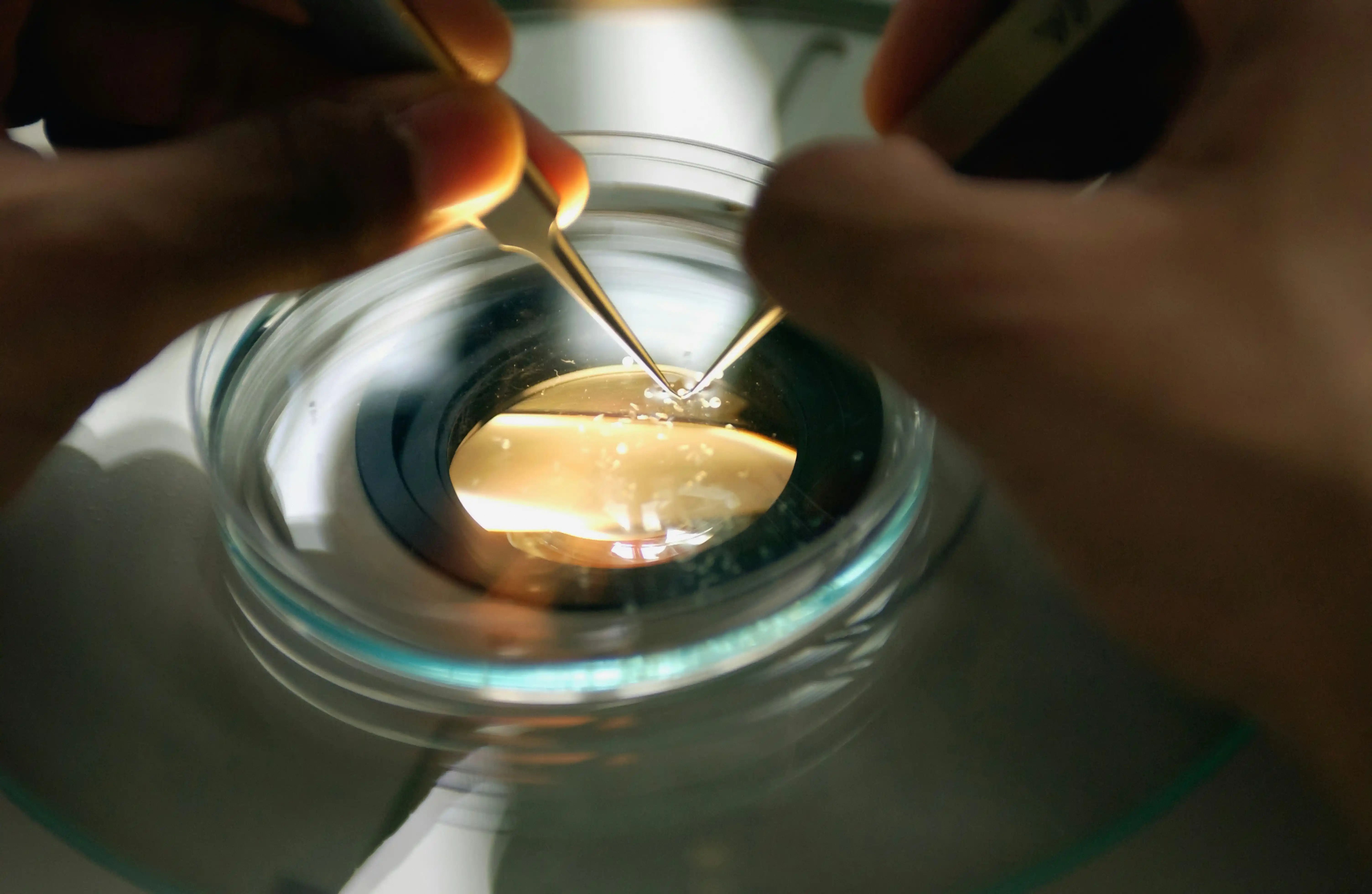
Definition
Embryo freezing, also called embryo cryopreservation, fertilizes your retrieved eggs with sperm through IVF or ICSI (intracytoplasmic sperm injection, where a single sperm is injected directly into an egg), cultures the resulting embryos to the blastocyst stage around day five or six, and vitrifies the best ones. You store them for a later frozen embryo transfer, when you are ready to try for pregnancy.
The key difference from egg or sperm freezing is that an embryo has already been fertilized. That means its viability is known before it goes into storage, and it can be genetically tested if you choose. The practice is well established and recognized by the American Society for Reproductive Medicine (ASRM).
This page explains what embryo freezing is, how it compares with egg freezing, what it costs versus the US, and how the remote process works. It is part of your fertility preservation options, alongside egg freezing and sperm freezing.
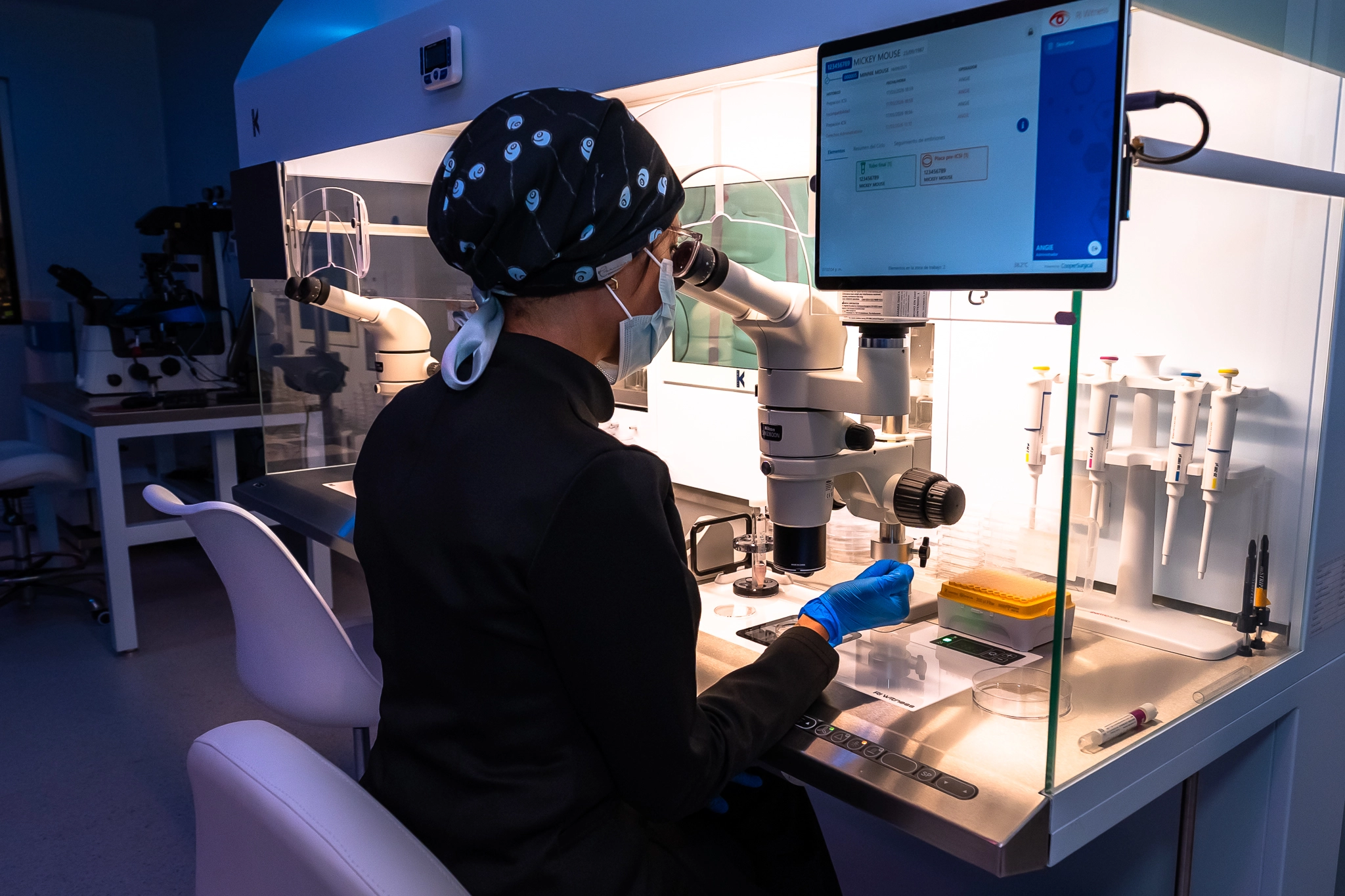
Choosing with clarity
The core difference is whether your eggs are fertilized before or after freezing, and whether you decide now or later who provides the sperm. Egg freezing keeps your options open; embryo freezing lets you know viability upfront and test embryos genetically.
One honest point that many clinics skip: with modern vitrification, survival is similar for both. Eggs survive thawing at roughly 90% (lab-dependent, about 80 to 97%) and embryos at roughly 95%. Because it takes several eggs to make one embryo either way, your number of future pregnancy chances ends up comparable. We will not overstate an embryo advantage that the data does not support.
| Factor | Egg freezing | Embryo freezing |
|---|---|---|
| Needs sperm now? | No | Yes (partner or donor) |
| Thaw survival | ~90% (vitrification) | ~95% (vitrification) |
| Know viability upfront? | No (fertilized later) | Yes (already fertilized and graded) |
| Genetic testing (PGT)? | Not until fertilized later | Yes, available before freezing |
| Pregnancy per transfer | Depends on later fertilization | ~40 to 60% per transfer |
| Flexibility on who fertilizes | High (decide later) | Lower (decided now) |
| Legal / ethical notes | Simpler | Joint decision; disputes possible on separation |
| Upfront cost | Lower (no fertilization now) | Higher (full IVF cycle + culture + optional PGT) |
| Best for | No partner yet / keep options open | Have a partner or donor / ready now / want PGT |
In short, choose egg freezing for flexibility and embryo freezing for certainty. If you are leaning toward keeping your options open, see our egg freezing page.
Not sure which is right for you? Talk it through in a free virtual consultation with our fertility team.
Mexico vs the US
Because embryo freezing runs on a full IVF cycle, its cost is anchored to IVF, which in Mexico City is considerably more accessible than in the US. That is a big part of why so many American patients travel here. Rather than a fixed price list, Avida shares a personalized estimate in consultation, because your cost depends on your case.
Important: your final cost depends on your cycle, whether you choose PGT, and how many embryos you bank. The IVF cycle itself is detailed on our IVF page, and you can review our guide to fertility treatment costs in Mexico and financing options.
Get your personalized cost estimate in a free virtual consultation.
Genetic testing
Preimplantation genetic testing lets you learn more about your embryos before you freeze or transfer them, so you can plan with better information. In the embryo-freezing context, it is done on the embryos you are banking for later. Testing can improve implantation rates and reduce the risk of miscarriage by helping select the healthiest embryos.
Screens for chromosomal abnormalities (aneuploidy).
Tests for specific single-gene disorders.
Detects structural chromosomal rearrangements.
Here is the honest part. PGT-A reliably reduces miscarriage, but in young, good-prognosis patients it does not necessarily raise the overall chance of a live birth. We recommend it when age or medical history justifies it, and we will tell you plainly when it may not add value for you. If you are pursuing a fresh cycle, PGT within that cycle is covered on our IVF page. You can also read whether PGT makes sense in every case.
Step by step
The embryo freezing process follows five steps: evaluation, an IVF cycle, embryo culture to blastocyst, vitrification, and future transfers. It applies whether you are a couple, a same-sex couple, or a single person using donor sperm.
This starts remotely with a virtual consultation and baseline testing, including an AMH test (anti-Müllerian hormone, a marker of ovarian reserve) to assess the egg provider's reserve. It applies equally to couples, same-sex couples, and single individuals using a donor.
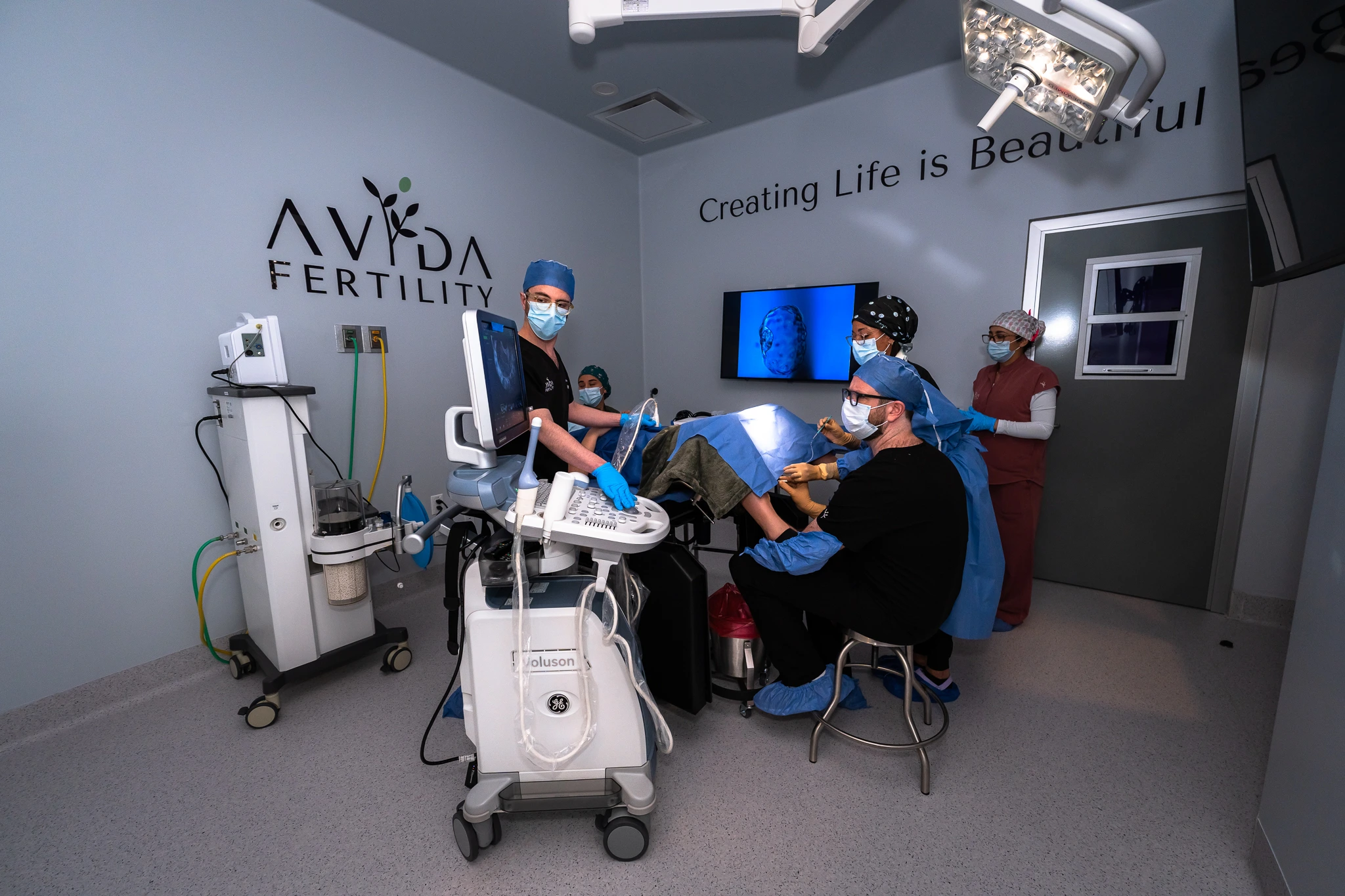
Ovarian stimulation for about 10 to 15 days is followed by egg retrieval (follicular puncture). The eggs are then fertilized with a partner's or donor's sperm through IVF or ICSI.
The embryos are cultured in monitored incubators to the blastocyst stage, around day five or six, when their quality is assessed. Learn how to read embryo grades.
The best embryos are vitrified at -196°C, with genetic testing performed first if you choose it.
When you are ready, your embryos are thawed for a frozen embryo transfer, which is a separate, simpler step than the full cycle.
If you are exploring inclusive family paths, our ROPA method, single mother by choice, and donor egg options may be relevant.
Oversight and standards
Yes, embryo freezing in Mexico is safe when the clinic is accredited and follows recognized standards. Avida operates under COFEPRIS, Mexico's equivalent of the US FDA, under permit 253300201A1949.
Our embryos are cultured in monitored incubators and vitrified with lab standards consistent with ESHRE and ASRM, then stored in secure, monitored cryostorage. Reassuringly, babies born from frozen embryos show no higher risk of birth defects than those from fresh transfers or natural conception.
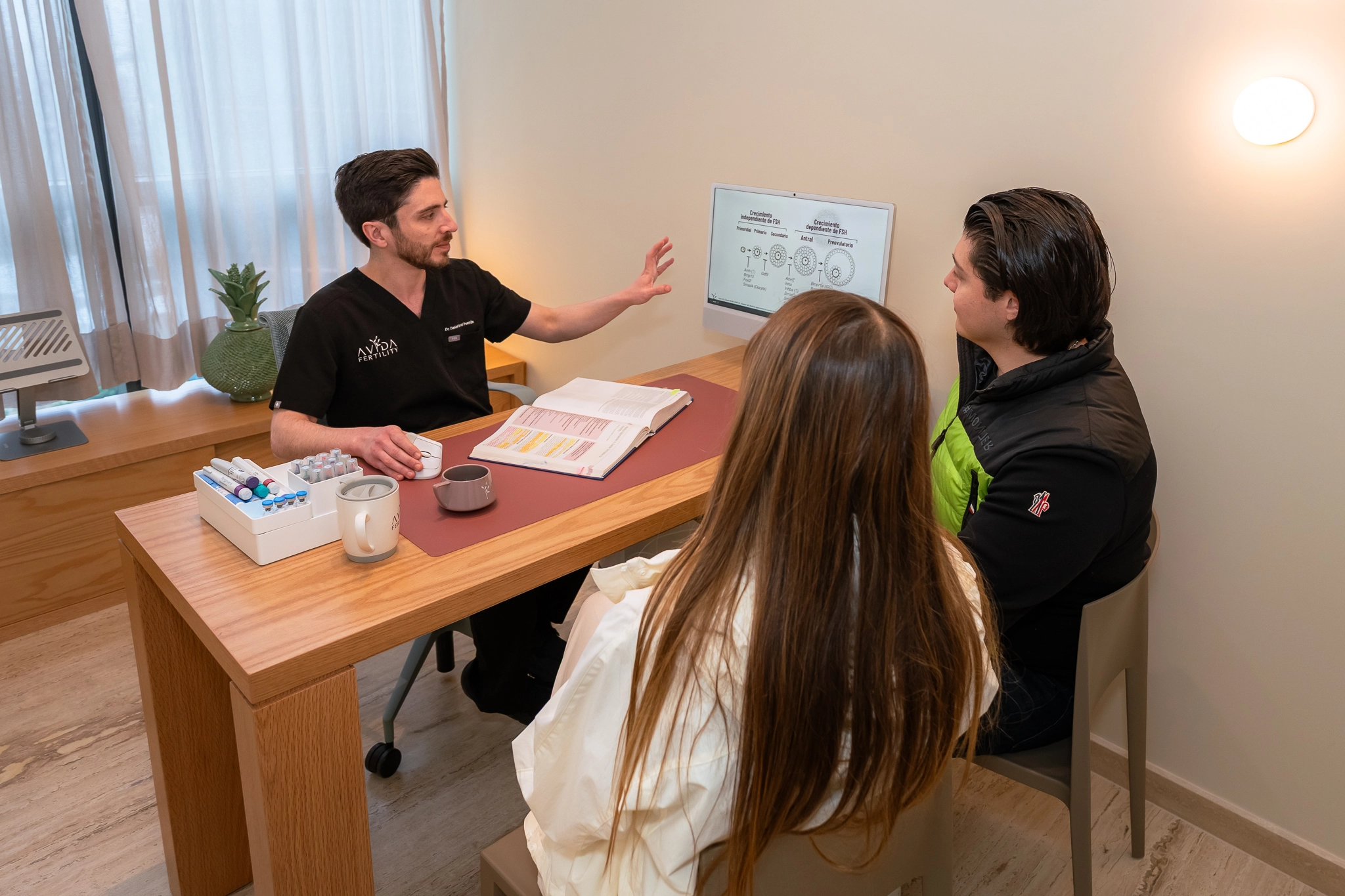
Dr. Daniel Pascal Pontón (SEP license 13928465) and Dr. Alejandro Kava Braverman, specialists in reproductive biology. Meet our team.
Traveling from the US
Traveling for embryo freezing is designed to be remote-first, with a helpful two-visit option. You can complete the retrieval and freezing on one trip, then return later for the frozen embryo transfer, which is a shorter visit.
You get direct flights to Mexico City, no visa requirement for US citizens, and a Central-US timezone. An English-speaking team coordinates every step, and when you are ready, they help coordinate the handoff to your US OB/GYN for pregnancy care after transfer.
Stimulation, egg retrieval, fertilization, and vitrification of your embryos.
A shorter visit when you are ready to try for pregnancy.
Handoff to your US OB/GYN for pregnancy care after transfer.
A medical destination
Mexico City is a genuine medical hub, not a resort detour, which matters when you are making a clinical decision. You get direct flights, no visa for US citizens, a Central-US timezone, and hospital-grade infrastructure. For the full case, see our fertility preservation hub.

Direct flights to Mexico City and no visa requirement for US citizens.
Scheduling and coordination with your care at home stay simple.
Accredited care under COFEPRIS oversight, with an English-speaking team.
FAQ
Choose egg freezing for flexibility if you do not have a partner or donor yet, and embryo freezing for certainty if you are ready to fertilize now or want genetic testing. With modern vitrification, survival rates are similar, so this is mainly a decision about your life stage. See the full comparison table above.
Because embryo freezing runs on an IVF cycle, its cost is anchored to IVF, which in Mexico City is considerably more accessible than in the US. Rather than a fixed price, you receive a personalized estimate in your consultation, since your cost depends on your cycle, whether you choose PGT, and how many embryos you bank.
Yes, when the clinic is accredited. Avida operates under COFEPRIS oversight (permit 253300201A1949), cultures embryos in monitored incubators, and follows ESHRE and ASRM lab standards. Babies from frozen embryos show no higher risk of birth defects than fresh or natural conception.
PGT is genetic testing of embryos: PGT-A for chromosomal abnormalities, PGT-M for single-gene disorders, and PGT-SR for structural rearrangements. It reduces miscarriage risk and helps select embryos, though it does not necessarily raise live-birth odds in young, good-prognosis patients. We recommend it when age or history justifies it.
It depends on your age and goals. As a benchmark, two to three good-quality blastocysts are often suggested under 35, and four to six if you are over 38 or embryo quality is reduced. Your specialist gives you an individualized target.
Indefinitely. All biological activity stops, so embryos do not age or deteriorate while frozen. There are documented healthy births from embryos frozen for many years.
No. Studies are reassuring: babies born from frozen embryos have health outcomes comparable to fresh transfers and natural conception. Vitrification does not alter the embryo's development.
You have options, and the choice is always yours: continue storage, donate to another couple or person, donate to research, or discard them. It is a personal decision you can take with time, and we are here to support it.
Yes. Freeze-then-transfer is common and often preferred, and it fits a two-visit plan: retrieval and freezing on one trip, and the frozen embryo transfer on a later, shorter visit.
No. Avida has an English-speaking team that coordinates your entire journey, from the first virtual consultation to your return home.
Usually not directly. That said, many patients request itemized invoices to submit for FSA or HSA use or partial reimbursement. Check with your provider, and we can provide the documentation you need.
Take the first step
Schedule your free virtual consultation with our English-speaking team. It is a free call with a fertility advisor, not a medical consultation.