A urologist treats the urinary tract in men and women, plus the male reproductive system. An andrologist is a urologist with extra training in male fertility, sexual health and hormones. See an andrologist for fertility or testosterone concerns and a urologist for urinary, prostate or testicular symptoms.
If you have been trying to conceive, you may not know whether to see a urologist or an andrologist first. Which one fits your situation? This guide explains what each one does, how they differ and what the tests involve.

Take charge of your fertility with experts.
Whether you are trying to conceive or already have a semen analysis result, our medical team explains your options with full transparency and backs every decision with precision technology and genuine, human support.
What Is a Urologist? Meaning and What They Treat
A urologist is a physician who diagnoses and treats conditions of the urinary tract in men and women, and of the male reproductive system. Put simply, the urologist definition is a doctor for the kidneys, bladder and prostate (the gland that adds fluid to semen), plus the testicles and penis in men.
If you have wondered what is a prostate doctor called? The answer is a urologist, because the prostate is one of the organs they treat.
A urologist typically treats these conditions, the practical urologist meaning:
- Urinary tract infections and kidney stones
- Incontinence, which means losing control of urine, and prostate conditions
- Kidney, bladder, prostate or testicular cancer
- Varicocele, which is enlarged veins inside the scrotum, and hydrocele, which is fluid collecting around the testicle
- Erectile dysfunction, meaning difficulty getting or keeping an erection
Some urologists also focus on fertility. A reproductive endocrinologist (REI) treats the person who would carry the pregnancy, while a reproductive urologist, also called an andrologist, treats the person who produces the sperm.
If you want to understand the testing itself, see our male fertility testing page.
What Is an Andrologist and What Do They Treat?
An andrologist is a urologist with extra training in male sexual, reproductive and hormonal health. The andrologist definition starts with the Greek root andro-, which means man, and andrology is the subspecialty of urology that covers this area.
Many patients ask what is an andrologist? The short answer is a urologist with extra training in male sexual, reproductive and hormonal health.
The andrologist meaning shows up in the conditions below, in the order they usually bring a patient in:
- Male infertility, including low sperm count, poor sperm movement and blockages
- Varicocele, the enlarged veins inside the scrotum
- Premature ejaculation
- Peyronie's disease, a bend of the penis caused by scar-like plaque
- Low testosterone, meaning low levels of the main male sex hormone
- Prostate infections and other prostate problems
- Testicular conditions
Erectile dysfunction is usually handled by a urologist, ideally one with andrology or sexual-medicine experience, and many andrologists have that experience.
Infertility is common. The WHO fact sheet on infertility estimates that about one in six people of reproductive age experience infertility at some point in their lives. Male factors contribute fully or partly in roughly half of infertile couples, according to the AUA/ASRM male infertility guideline.
In men, the WHO points to ejaculation disorders, low or absent sperm counts, and abnormal sperm shape or movement as common causes. Andrologists order tests such as semen analysis and hormone panels, and on complex cases they often work with fertility clinics, endocrinologists and urologists.
Both partners should be assessed together, so it can help to review the complete fertility workup options before you decide. Because an andrologist is a urologist first, many patients ask how this compares with gynecology.
Is an Andrologist the "Male Gynecologist"?
Partly. An andrologist handles male sexual and reproductive health much as a gynecologist handles female health. The limit is that an andrologist is a urologist first and does not manage pregnancy.
In that sense, an andrologist is the male equivalent to a gynecologist, and a man is evaluated with a semen analysis much as a woman is evaluated with reproductive testing of her own. What is a male doctor called? For fertility or sexual health concerns, the answer is an andrologist.
You may also hear the terms men's reproductive doctor or reproductive urologist, which describe the same specialist in US practice.
Sexologists and andrologists are often confused. An andrologist is a medical doctor, while a sexologist is usually a psychologist or therapist who works on the emotional and relational side of sex. Sometimes both are involved in care, and women can also be andrologists.
Andrologist vs. Urologist: Key Differences
The main difference is scope. A urologist covers the whole urinary tract and the male reproductive system, while an andrologist focuses on male sexual, reproductive and hormonal health. The table below compares who each one treats, the conditions they manage and when each makes sense to book.
An andrologist starts out as a urologist and then focuses on male reproductive health. Neither specialty replaces the other: a urologist is the broader specialty, and an andrologist is the narrower path within it for fertility and sexual health. That is the short answer to andrologist vs urologist: related specialties, but not parallel ones.
Are an andrologist and a urologist the same? Not quite. Every andrologist is a urologist first, but not every urologist is an andrologist.
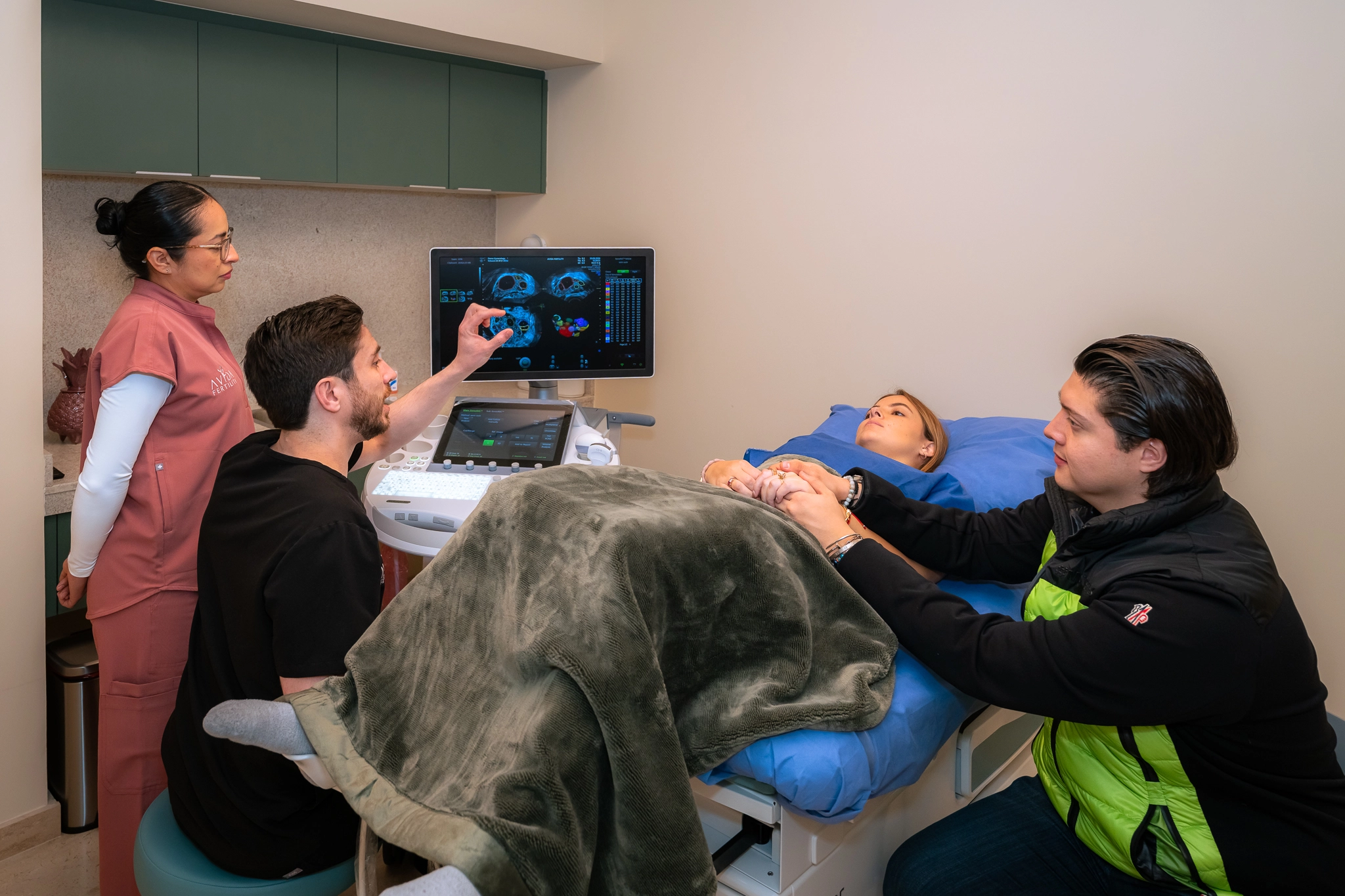
If you are planning a pregnancy, you can meet Avida's medical team.
Know your starting point.
Before choosing a treatment, it helps to understand what is going on. Our medical team reviews your results and your history and walks you through your options step by step, with complete transparency.
Which Doctor Should You See? A Symptom Guide
A urologist is usually the right first doctor for urinary symptoms, testicular pain or prostate concerns. For fertility or sexual health, an andrologist is the right choice.
Who checks a man's testicles? A urologist does, for pain or a lump. If you have searched for a doctor for testicles or a testis doctor, the answer for symptoms is a urologist, and for fertility concerns an andrologist.
The table points you in the right direction, but a doctor must confirm your case.
When Should You See an Andrologist?
See an andrologist after 12 months of trying to conceive without success, or after six months if the person who would carry the pregnancy is 35 or older. That timing follows the ASRM definition of infertility.
The same definition covers medical help to conceive as an individual or with a partner, including donor gametes or donor embryos. That part has no time limit.
Also book a visit for:
- An abnormal semen analysis
- Trouble with ejaculation (for erections, see a urologist with andrology experience)
- Suspected low testosterone, which needs symptoms plus low total testosterone on blood tests
- A history that can affect fertility, such as surgery, infections or cancer treatment
- Plans for a vasectomy or a vasectomy reversal
You can check any US specialist's board certification for free on ABMS Certification Matters. Andrology is not a separate board certificate, so look for a urology certificate.
What Are the Red Flags That Mean You Should See a Urologist?
Any of these signs means you should see a urologist promptly.
- Blood in the urine
- Pain or burning when you urinate
- Trouble urinating or a weak stream
- Pain, a lump or swelling in a testicle
- Persistent flank or pelvic pain
Sudden, severe testicular pain is an emergency. It can signal testicular torsion, a condition in which the testicle twists and loses its blood supply, and the Urology Care Foundation notes that damage can begin after about six hours. Go to the emergency room right away.
What Tests Does an Andrologist Do? What to Expect at Your First Visit
The core test is the semen analysis, also called a sperm test. It is read alongside your medical history and a physical exam.
- Medical history. Your doctor asks how long you have been trying, about your health history and about your lifestyle.
- Physical exam. A physical examination is part of the evaluation.
- Semen analysis. The lab measures sperm concentration (how many sperm per milliliter), motility (how many move and how well) and morphology (the share with a normal shape). You will usually abstain from ejaculation for two to seven days beforehand, the range in the WHO laboratory manual, sixth edition.
- Hormone panel. A blood test for hormones such as testosterone, if your doctor recommends it.
- Testicular ultrasound. Only if it is needed.
Your sample is analyzed in an andrology laboratory, a lab that specializes in semen testing. Here is how the process works at Avida, as described on our male fertility evaluation page:
- Three to five days of abstinence before the sample.
- Sample collection in a private, discreet room.
- A semen analysis of concentration, motility and morphology, following WHO standards.
- A consultation that includes a physical exam.
- Interpretation by a reproductive biology specialist.
- Results in about 24 to 48 business hours.
- Specialized studies only if the analysis is abnormal.
- A personalized clinical path.
Avida's three to five days of abstinence falls inside the two to seven day range in the WHO manual.
If the semen analysis is abnormal, a doctor may order specialized studies, such as sperm DNA fragmentation testing. These are not routine. The AUA and ASRM guideline does not recommend this test in the initial workup, but it may be considered after recurrent pregnancy loss.
When to Move From an Andrologist or Urologist to a Fertility Clinic
Consider a fertility clinic after 12 months of trying without pregnancy, or after six months if the person who would carry the pregnancy is 35 or older. Move sooner if a semen analysis comes back abnormal.
The World Health Organization defines infertility as a disease of the reproductive system that prevents pregnancy after 12 months or more of regular, unprotected sex.
The AUA and ASRM guideline recommends that both partners be assessed at the same time. Without an adequate male evaluation, a couple can end up in unnecessary, costly and invasive treatment.
Treatment options range from intrauterine insemination (IUI) to in vitro fertilization (IVF). A low total motile sperm count on repeat testing can lower the chance of success with IUI. No option can promise a pregnancy.
If cost is part of your decision, start with IVF cost in Mexico. If you are thinking about treatment in Mexico, you can read our guide to fertility treatment in Mexico.
Not sure whether an evaluation is due yet? Read how to know if you are infertile to help you decide.
If you are a man without a partner, a semen analysis is the first step, and you can read about options for single fathers by choice. The same first step applies if you have a same-sex partner.
A medical plan that starts by listening to you.
We know taking the first step takes courage. Our medical team takes the time to assess your overall health and explain your options, in a safe space and with no pressure.
In Summary
Choosing between an andrologist and a urologist comes down to your symptoms. If you have tried to conceive for 12 months, or six months if the person who would carry the pregnancy is 35 or older, an evaluation is worth booking. Bring your symptoms, your timeline and any previous semen results to your first visit. A first visit is a good place to ask questions.
- For urinary symptoms or testicular pain, see a urologist.
- For fertility concerns or an abnormal semen analysis, see an andrologist.
- The semen analysis is the core test, and both partners should be evaluated together.
Book your assessment
References
- World Health Organization. Infertility fact sheet. https://www.who.int/news-room/fact-sheets/detail/infertility
- American Society for Reproductive Medicine. Definition of infertility (2023). https://www.asrm.org/practice-guidance/practice-committee-documents/definition-of-infertility/
- American Urological Association and ASRM. Male Infertility guideline (2020, amended 2024). https://auanet.org/documents/Guidelines/PDF/2024%20Guidelines/Male%20Infertility%20Unabridged%20Final.pdf
- World Health Organization. WHO laboratory manual for the examination and processing of human semen, sixth edition. https://www.who.int/publications/i/item/9789240030787
- Chung et al. Arab Journal of Urology (2023), abstinence range for semen analysis. https://pmc.ncbi.nlm.nih.gov/articles/PMC10929669/
- Urology Care Foundation. Testicular torsion. https://www.urologyhealth.org/urology-a-z/t/testicular-torsion
- American Urological Association. Evaluation and Management of Testosterone Deficiency. https://www.auanet.org/guidelines-and-quality/guidelines/testosterone-deficiency-guideline
- ABMS. Certification Matters. https://www.certificationmatters.org/